
How it works
Choose a clear JPEG, PNG, or WebP image up to 10 MB. yito validates the file, reserves the displayed credits, runs the fixed recipe, and releases the reservation if generation fails.
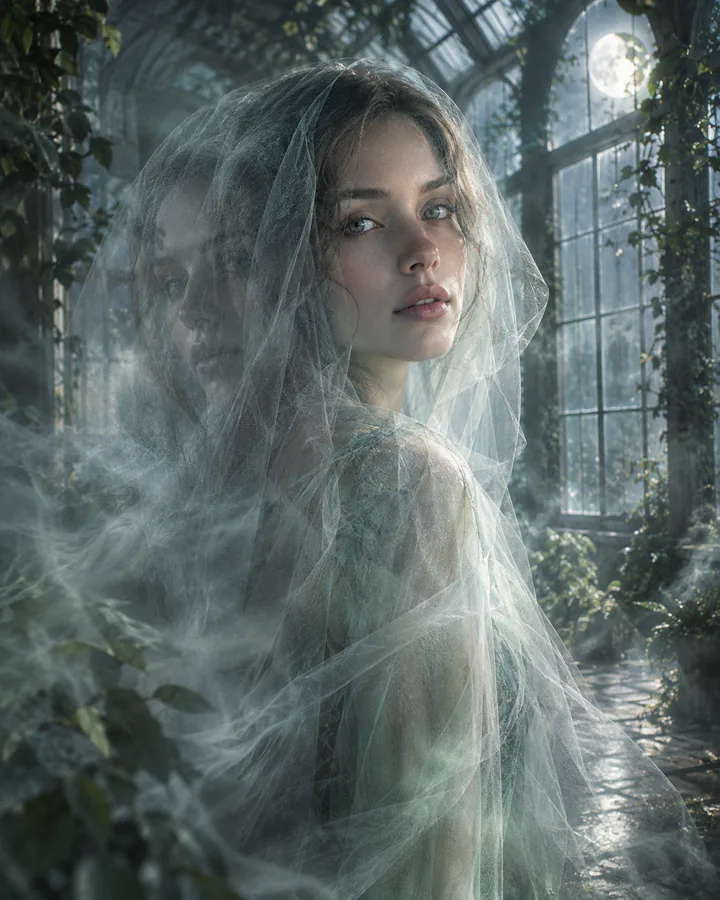
Guided photo recipe
A translucent ghost portrait fading into mist.
Ghostly Veil is a translucent double-exposure portrait: tulle, mist and a pale silver palette over an abandoned conservatory. It is designed to look haunted rather than gory.
Because the effect is translucent, fine details can disappear. Start with a high-contrast portrait and review the eyes, mouth and veil edge; if the face is unreadable, regenerate with a closer crop.
Choose a clear JPEG, PNG, or WebP image up to 10 MB. yito validates the file, reserves the displayed credits, runs the fixed recipe, and releases the reservation if generation fails.
Use a well-lit image where the main person, pet, or product is unobstructed. Small faces, cropped products, blur, and heavy compression reduce consistency.
The recipe requests consistency but cannot guarantee it. Reject identity drift, altered hands, product geometry, packaging text, edges, or background details. Save only reviewed results promptly because links can expire.
This is the model instruction behind the look. Copy it into a compatible image editor if you want to adapt it; the Studio button applies it for you.
Edit the uploaded portrait into an ethereal ghost portrait. Preserve the subject’s recognizable face, eyes, mouth, skin tone and pose. Add a translucent tulle veil and a soft double-exposure effect with drifting mist, without erasing the facial features. Place the subject in an abandoned conservatory with tall windows, pale moonlight and overgrown plants. Use a pale silver-and-sage palette, cinematic soft focus and realistic fabric transparency. Keep exactly one person. Keep the eyes and mouth readable. Avoid gore, skulls, extra people, duplicated limbs, text and logos.
Yes. The recipe keeps the eyes and mouth readable while the veil and mist soften the edges of the portrait.
It imitates a double exposure inside a single generated image; no second photo is required.